

The NQCC hosts a range of early career placements aimed at building the next generation of quantum talent by offering hands-on experience and insight into the field of quantum computing, supporting their professional growth and interest in the sector. Among these initiatives, the NQCC launched its first master’s-level placement in 2025, marking an exciting expansion of its early career programmes.
Globally, there is a growing demand for individuals with master’s-level qualifications[1,2] in the quantum workforce, driven by the rapid advancement of quantum technologies and the need for professionals who can help translate research into practical, real-world applications. In response, many universities around the world are developing new master’s programmes with a significant rise in the number of programmes since 2021[2]. Quantum technologies master’s programs could be a key route into the quantum industry, providing an effective pathway for students to gain specialised knowledge and skills without the extended timeline associated with PhD programs[3,4].
In the UK, this trend is gaining momentum, with several universities now offering one-year master’s programmes in quantum technologies. By introducing its master’s placement scheme, the NQCC aims to play a key role in supporting this educational and talent pipeline – offering students the opportunity to gain practical experience and develop their expertise by working alongside NQCC’s technical experts.
Learning at the NQCC: A placement student’s reflection
We were delighted to host Muhammad Masood, our first master’s placement student, pursuing a master’s in Applied Quantum Computing at the University of Surrey. During his placement, Muhammad contributed to upgrading the quantum control infrastructure under the supervision of Dr Alex Owens, an ion-trap physicist at the NQCC. His work specifically focuses on the laser control systems used in the ion trap. We caught up with Muhammad to hear about his experience at the NQCC and to gather his advice for students interested in future placements with us.
Can you tell us a bit about your placement?
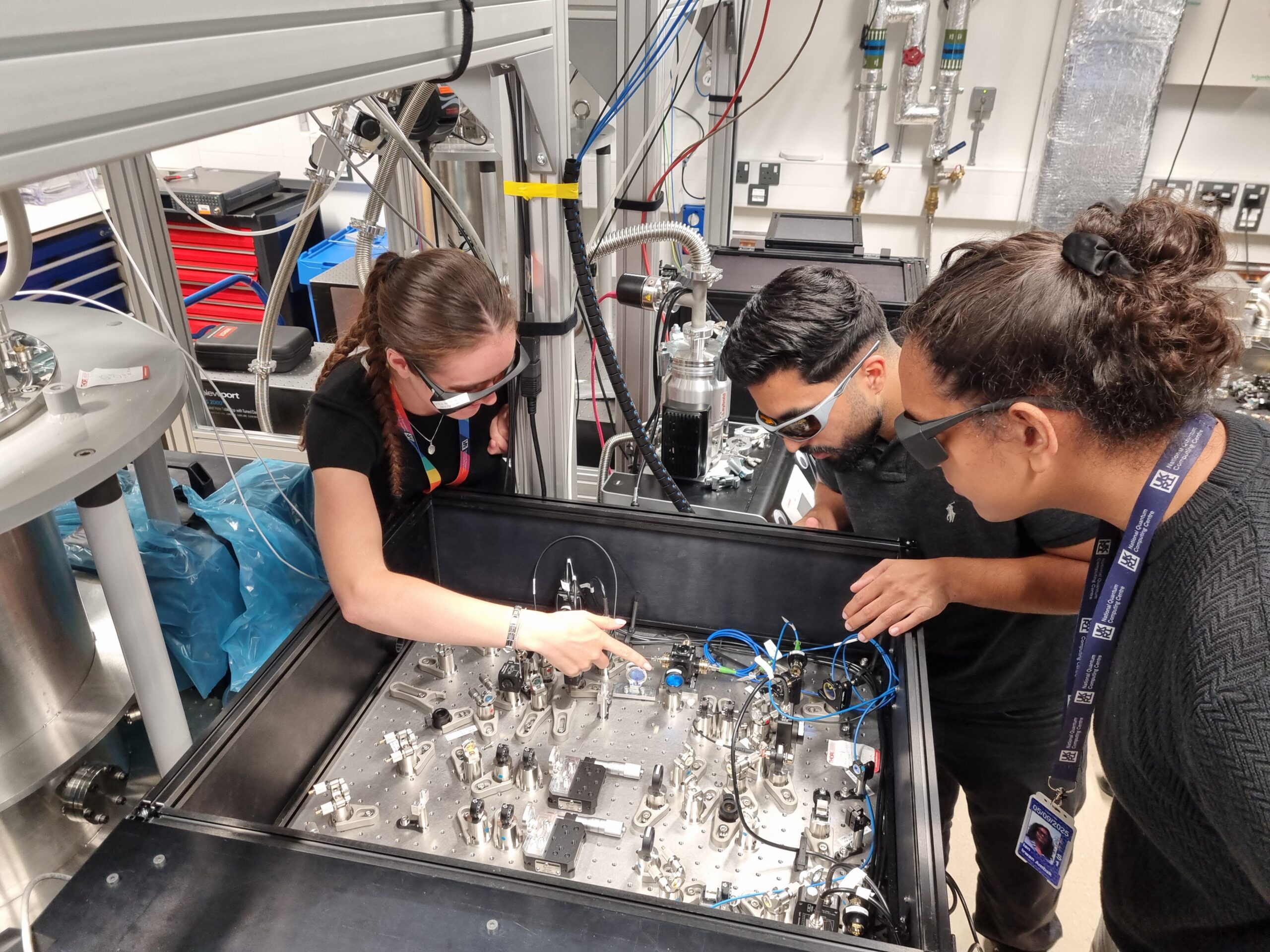
I spent around twelve weeks at the NQCC as their first MSc student, working with the trapped ion quantum computing team. My project formed part of my dissertation and focused on upgrading the quantum control infrastructure that delivers lasers to the ion trap. Most of my time was spent in the lab assembling distribution and acousto-optic modulators (AOM) boards, aligning lasers, fibre coupling, and installing the drawers into the newly built rack. Alongside this, I also completed a two-day Advanced Real-Time Infrastructure for Quantum physics (ARTIQ) training course, which gave me a strong introduction to the control systems used in experiments.
Why did you choose to do this placement with the NQCC?
I wanted to work somewhere that sits at the centre of the UK quantum ecosystem. The NQCC gave me the chance to work on real hardware while being surrounded by people pushing forward large-scale quantum projects. I also wanted exposure to the wider community and industry, and this placement provided that. When the opportunity came up through my MSc, it felt like the right place to apply.
Why did you choose to do this placement with the NQCC?
I wanted to work somewhere that sits at the centre of the UK quantum ecosystem. The NQCC gave me the chance to work on real hardware while being surrounded by people pushing forward large-scale quantum projects. I also wanted exposure to the wider community and industry, and this placement provided that. When the opportunity came up through my MSc, it felt like the right place to apply.
What project(s) have you been working on?
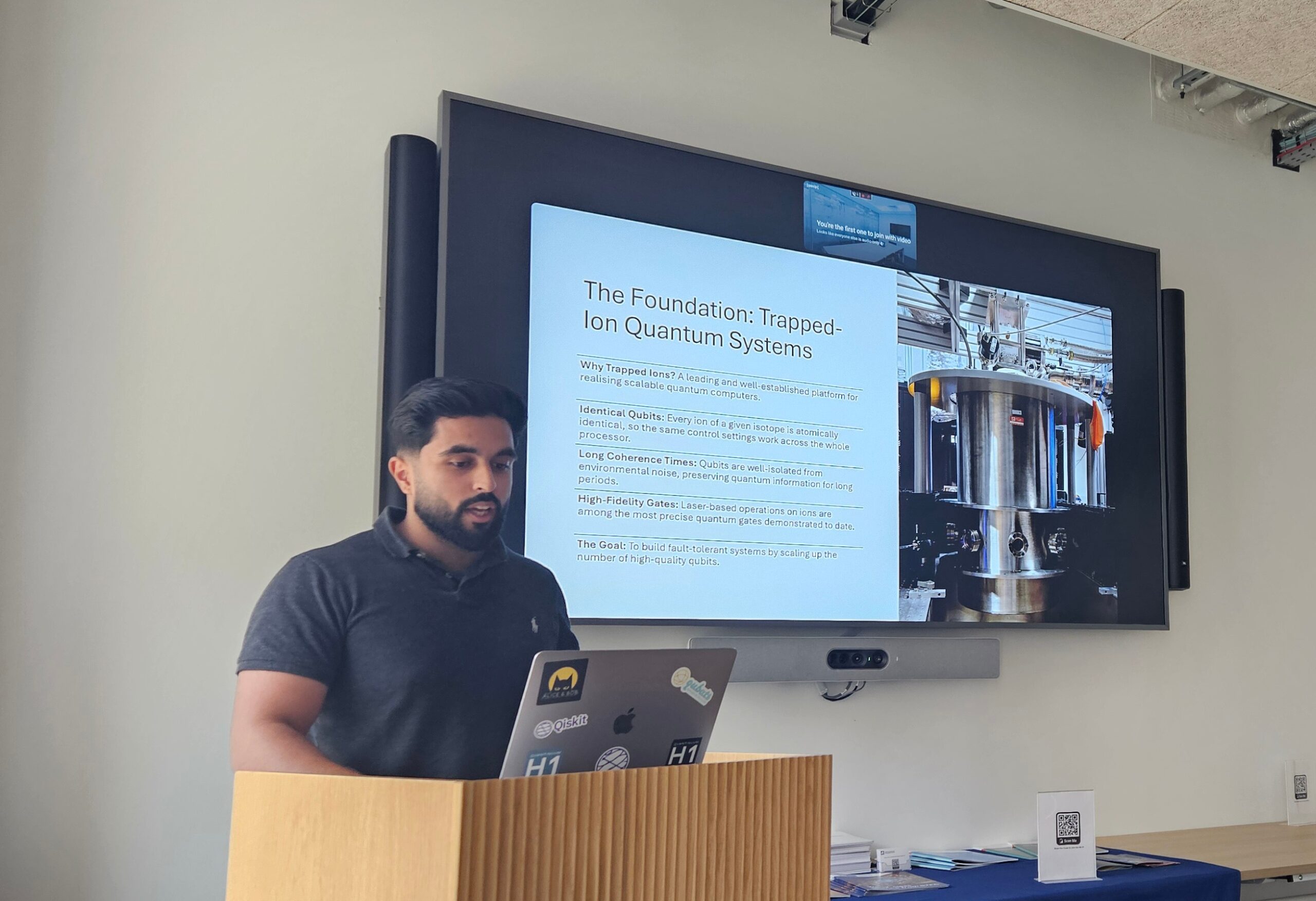
My project focused on upgrading the trapped-ion quantum control infrastructure at the NQCC. Trapped-ion systems rely heavily on stable and precise laser delivery for qubit preparation, manipulation, and readout. As these experiments scale, the complexity of distributing and controlling many laser beams also increases. Building reliable infrastructure to manage this is a crucial step towards larger trapped-ion quantum computers. The task was to assemble and integrate the modular distribution and AOM boards into a new rack system. I worked on aligning the laser outputs to make sure beams were correctly prepared for delivery, carried out fibre coupling, and managed fibre routing so that the setup remained stable and easy to access. This practical assembly work was supported by close collaboration with the team, who guided me on the technical standards needed for a system of this scale. The outcome was a more organised and reliable laser control setup that will support future trapped ion experiments at the NQCC. One limitation of this type of work is that optical alignment and fibre coupling are sensitive to vibrations and small changes in the lab environment, so long-term stability remains an ongoing challenge. Looking ahead, the infrastructure could be extended with improved fibre management solutions and automated monitoring tools to track laser power and alignment over time.
What have you learned during your placement?
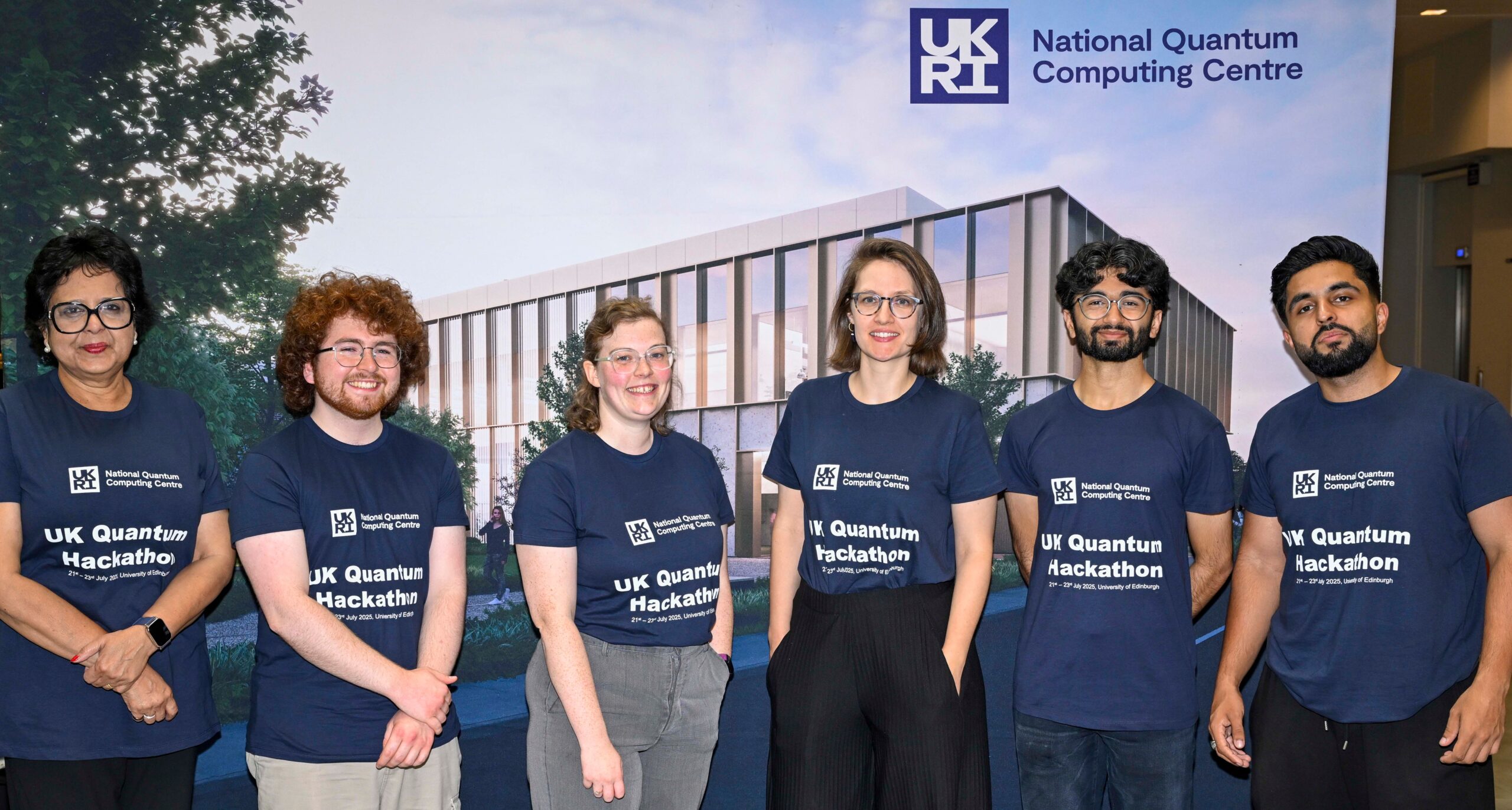
I developed hands-on lab skills like optical alignment, fibre coupling, and working with distribution and AOM boards. I also obtained experience in handling infrastructure tasks like rack assembly and fibre organisation. The ARTIQ training course gave me a good foundation for understanding control systems. Beyond the technical side, I learned how to approach problems step by step and how this kind of detailed engineering work underpins the operation of a quantum computer. I also attended the NQCC quantum hackathon during my placement. That was extremely insightful because it gave me exposure to real quantum use-cases and showed me just how impactful it can be.
What have been your key takeaways?
I’ve really enjoyed my time at the NQCC. The team here is so lovely and supportive. They explain technical concepts clearly and are always open to questions. I also felt I could have genuine conversations with them about things outside of work. It was easy to build strong connections, and they’ve been very open about helping us in the future with career opportunities.
What advice do you have for others looking to do a placement at the NQCC?
Come with an open mind and be ready to learn quickly. The projects are very hands-on, so you’ll naturally pick up new skills. Take advantage of opportunities like training courses and events, because they broaden your perspectives. And don’t hesitate to ask questions, because the people here are always happy to help and support your journey.
References:
- Greinert, F., Ubben, M.S., Dogan, I.N. et al., Advancing quantum technology workforce: industry insights into qualification and training needs, EPJ Quantum Technol. 11, 82 (2024). https://doi.org/10.1140/epjqt/s40507-024-00294-2
- Goorney, S., Muñoz, B. & Sherson, J., Quantum technology master’s: a shortcut to the quantum industry?, EPJ Quantum Technol. 12, 2 (2025). https://doi.org/10.1140/epjqt/s40507-024-00299-x
- Kaur, M., Venegas-Gomez, A., Defining the quantum workforce landscape: a review of global quantum education initiatives, Optical Engineering 61, 081806 (2022). https://doi.org/10.1117/1.OE.61.8.081806
- Fast-growing quantum tech industry has well-paid jobs — and most don’t require a graduate degree | Chicago Quantum Exchange